
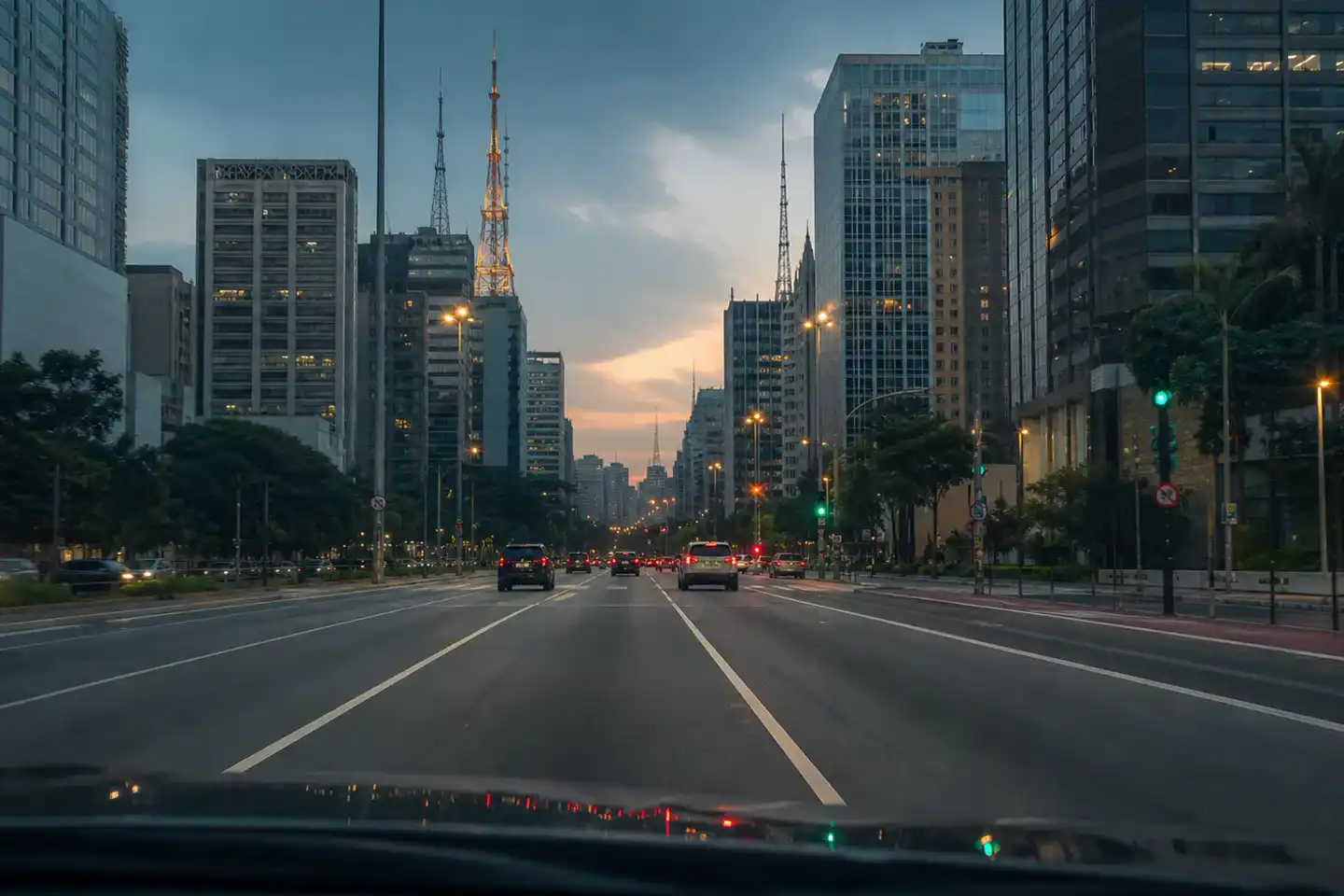
A quiet street, a clear sky and a café beside the water: a few minutes of video can make a destination look like exactly what you need.
Before that impression becomes a booking decision, pause and ask what the recording actually establishes. You can enjoy the scene and still leave room for questions.
Use this checklist whenever a travel video gives you an idea you want to pursue.
Before watching: check the context
Look at the source video's title, description and any chapters or route notes. Find out what the creator says about the location and filming conditions.
Keep these questions handy:
- Is the exact location identified, or only the city?
- Is a recording date given?
- Does the description explain the route or time of day?
- Is the video presented as a continuous journey or an edited selection?
A publication date is not necessarily the filming date. If information is missing, mark it as unknown rather than supplying your own explanation.
While watching: write down what is visible
Keep observations narrow enough to be useful. “There are steps at this entrance” is more precise than “this district is difficult to access”.
Similarly, a few people in one frame do not establish typical crowd levels. A shop sign does not confirm that the business still operates.
Save a timestamp for details you want to revisit, along with the source link. That makes it easier to check the original context later.
Separate the observation from the conclusion
Use three columns in your notes:
| What I noticed | What I am considering | What to verify |
|---|---|---|
| A staircase on the recorded route | This approach might not suit my group | Whether a suitable alternative exists |
| A place serving food | It could be a useful lunch stop | Identity, current opening and booking details |
| An appealing public space | I might enjoy spending time there | Location and current access |
| Few people during this section | I would like a quieter outing | Context of the recording; avoid assuming typical conditions |
The middle column is allowed to contain ideas. The final column prevents those ideas from silently becoming facts.
Notice what the camera leaves unanswered
The footage may not show the approach from transport, the return journey, facilities or neighbouring streets. Editing and playback speed can also affect your sense of distance and time.
Sound deserves its own check. Added music or a separately playing radio station is not evidence of ambient noise at the location. Even original audio captures only the conditions of that recording.
Use a map for route planning and current local information for details that affect access, safety or bookings.
After watching: choose one next step
Decide whether the video gave you a place to investigate, a preference you understand better or an unanswered question.
Follow up on one item. Locate the place, check the activity or compare it with an alternative. If you cannot verify something important, keep it off the confirmed itinerary.
You do not need to research every detail in the video. Focus on the ones that could change your plans.
Try the checklist on your next virtual visit
Open London on YouCity and choose an available experience. Note one visible detail, one idea it suggests and one thing you would need to check before travelling.
That is enough to make the session useful—and still leave you free to enjoy the view.