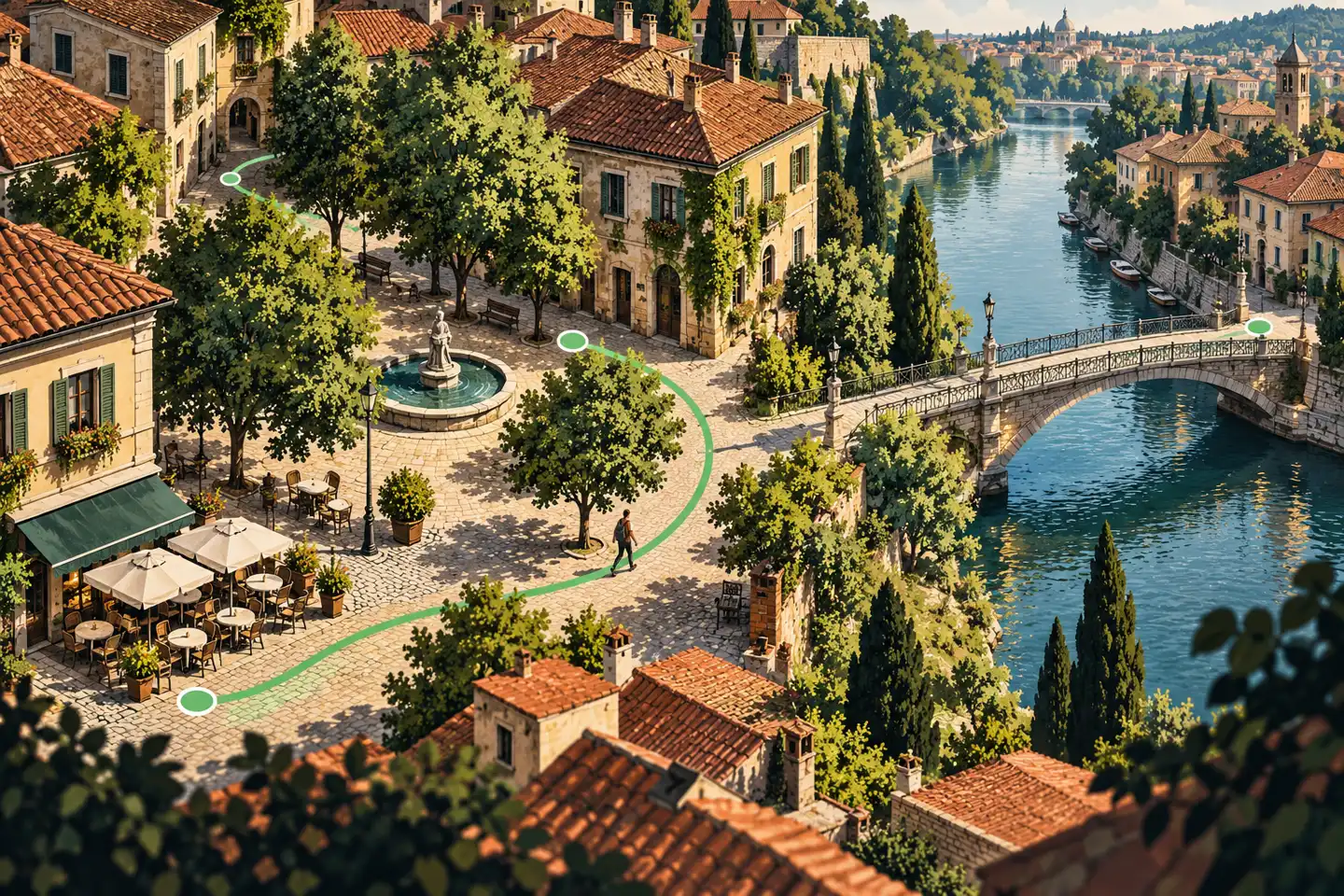
You have booked two nights away. Now there are seventeen saved places on your map, three restaurant recommendations and a museum that could easily fill an afternoon.
Everything looks worth doing. There just isn’t room for all of it.
A good weekend plan starts with choosing what matters most. Give your trip a little structure, group nearby places together and leave enough space to enjoy being somewhere new.
Here is a flexible way to plan your next 48-hour city break.
First, count the time you really have
Two nights away can mean very different trips.
Arriving on Friday afternoon and leaving late on Sunday gives you a different set of options from arriving near midnight and departing early on Sunday.
Before choosing activities, write down:
- When you expect to reach your accommodation.
- When you can check in or leave your luggage.
- When you need to begin your journey home.
- Any fixed commitments already booked.
Build your itinerary inside that window. Include time for arriving, finding your way and getting something to eat.
If you have only one full day, make that day the centre of your plans.
Choose two experiences you would regret missing
Pick two things that made you want to visit.
They might be a museum, a neighbourhood, a particular meal or a walk beside the water. They do not have to be the city’s most famous attractions.
These become the main commitments of your weekend. Check opening arrangements and book ahead where necessary.
Then keep a separate list of optional places. You can add them when time, energy and location make sense.
This makes it easier to change your plans without feeling that the trip has gone wrong.
Your arrival: get settled and explore nearby
For your first outing, choose something close to where you are staying.
A short walk and dinner may be enough. Use the time to get your bearings: find your nearest transport stop, understand the route back and notice somewhere you might like to return.
Avoid making the success of your first evening depend on a tightly timed reservation immediately after your expected arrival. If there is something you particularly want to book, allow room for delays.
If you arrive early and feel energetic, choose an extra stop from your optional list.
Your full day: one main experience, one area to explore
Give your first full day a clear focus.
Morning: your main attraction
Plan the activity that benefits most from being organised ahead of time.
Check how to get there, entry arrangements and how long you would like to spend. Include the journey from your accommodation rather than starting the schedule at the attraction’s entrance.
If it is a museum, decide what interests you before going. If it is a walking route, identify a comfortable place to pause.
Lunch: leave a useful gap
Choose a lunch area near your morning activity or on the way to your afternoon destination.
You can reserve somewhere if the meal itself is a priority. Otherwise, give yourself a few suitable options and enough time to choose.
A break is also a chance to adjust the rest of the day. You may want more exploring, or you may have already done enough walking.
Afternoon: stay within one neighbourhood
Choose an area where several things interest you and explore at your own pace.
That might mean a small gallery, a market and a café. It might mean wandering without entering another attraction.
Group optional stops geographically. Crossing the city for one item on a list is a decision worth making deliberately, especially on a short trip.
Evening: make one plan you look forward to
Choose dinner, a performance, an evening walk or another experience that appeals to you.
Check the return journey before heading out, particularly if you expect to finish late.
You do not need to add more simply because there is still space on the schedule.
Your final day: follow what caught your attention
Use the remaining time for your second priority—or something you discovered after arriving.
Perhaps you passed a street you wanted to explore. Perhaps your first museum visit made you curious about another collection. Perhaps you would rather spend the morning somewhere familiar.
Plan backwards from your departure. Account for collecting luggage, reaching the station or airport and the arrival time recommended by your transport provider.
Choose a final outing that fits comfortably inside that window.
Keep a weather alternative
For each outdoor-heavy part of the trip, identify one indoor option you would genuinely enjoy.
Check whether it needs booking and whether it opens on the relevant day. A saved attraction is only a useful alternative if you can actually visit it.
If conditions change, you will have a choice ready without needing to research the whole city again.
Preview your destination before filling the schedule
You can use YouCity to explore available city videos before your trip.
Watch for the surroundings that hold your attention. Are you drawn to busy streets, waterfront views, historic buildings or quieter stretches between landmarks?
Write down what appeals to you, then research suitable places to experience it.
Footage may not cover your planned route or reflect current conditions. Use it to discover interests, then verify the practical details separately.
A simple weekend template
| Part of the trip | Main plan | Keep flexible |
|---|---|---|
| Arrival | Check in and get your bearings | A nearby walk or meal |
| Full-day morning | Your first priority | Extra time if you enjoy it |
| Full-day afternoon | Explore one area | Smaller stops and breaks |
| Evening | One experience you want | Everything around it |
| Final day | Your second priority or a return visit | Adjust around departure |
Before you finish planning, look at the itinerary once more.
Can you move or remove something without losing the reason you wanted to go? Is there room to stop when you find somewhere interesting?
Leave that room in place. It belongs to the trip too.